

🎙️ Today we sit down with Lindsay Goffman, who went from the ICM mailroom to producing global hits and now pivoted to launch a tech company. Amazing story.
💼 Looking for open Entertainment jobs? Scroll to the bottom of this email. Our Job Board now has 135+ early career Entertainment roles as well.
Not subscribed yet? Join 33,500+ of your peers. Your future self will thank you.

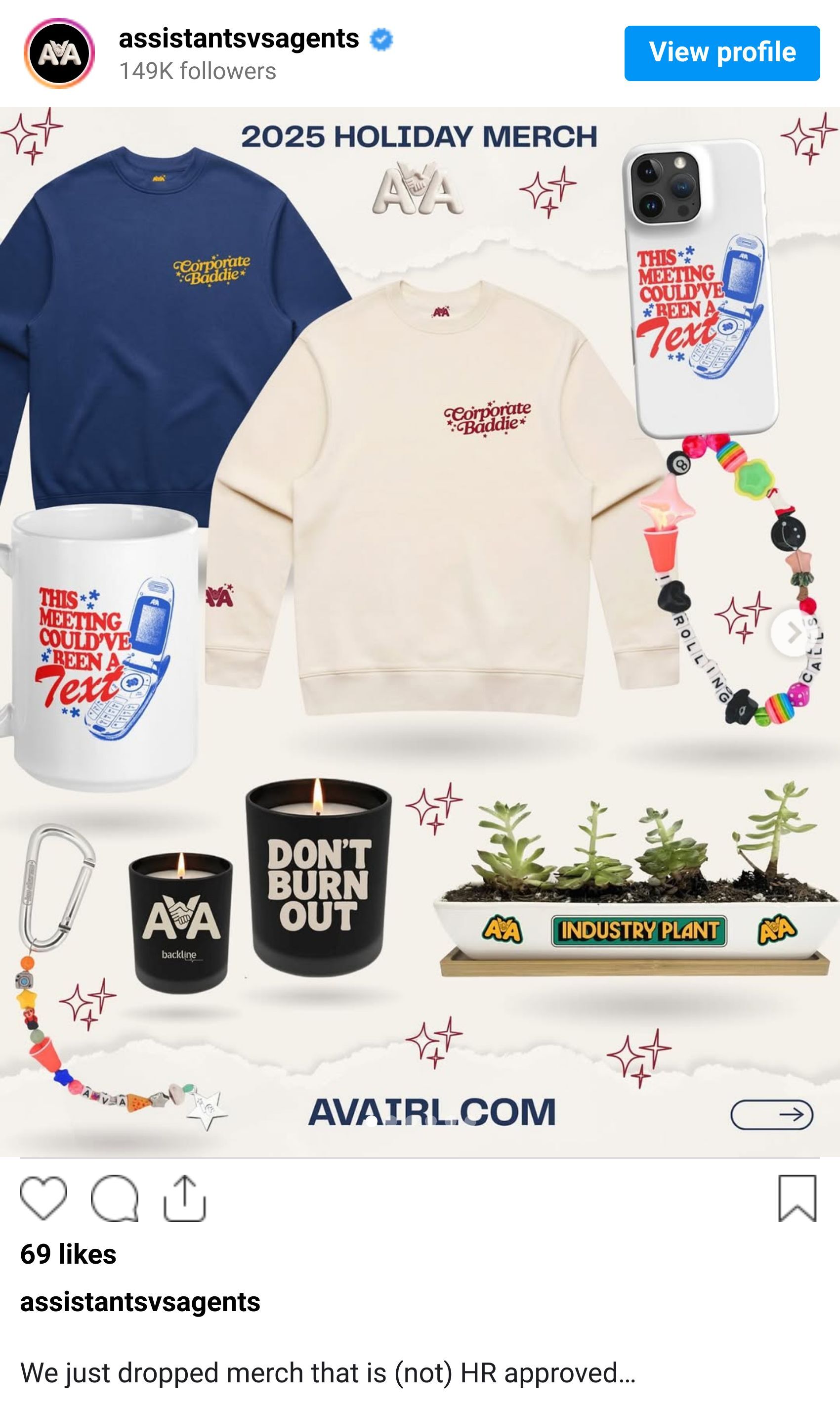
We just dropped Holiday Merch perfect for that random person you got assigned to in your company’s white elephant party. Comment on the IG post and we are giving away a merch bundle”


1) Netflix wins the Warner Bros. Discovery race
The tea:
The mega deal is valued at $82.7 Billion
They beat out Paramount & Comcast
They will expand the WBD studio business
Netflix took on $59 Billion in debt to make it happen
The theater business is not happy, and understandably so
2) Spotify Wrapped had 200 million users engage within the first 24 hours
19% increase YoY, and it took 62 hours in 2024 to reach the same viewership.
Deeper Dive 🏊: This year Bad Bunny was the most streamed artist globally on Spotify, reaching just shy of 20 billion streams in 2025. Taylor Swift held the top spot for the past 2 years with over 26 billion streams each year for further context.
3) ‘Wicked’ Director Jon M. Chu just penned a 3-year ‘first look’ film & TV deal with Paramount Skydance.
Chu’s last deal was with Warner Bros. Discovery where he made ‘Crazy Rich Asians’ and ‘In The Heights.’ Matt & Ross Duffer, James Mangold, and Will Smith also recently entered into similar agreements with Paramount.
4) Jorja Smith’s label is seeking to set new guardrails on royalites from AI-generated music.
5) Eventbrite was just bought for $500 million and may soon be entering the secondary ticketing market.
The private equity firm Bending Spoons based out of Milan bought the company in an all-cash transaction. Their track record: AOL, Vimeo, and WeTransfer. The model: buy declining businesses and try and revive them.

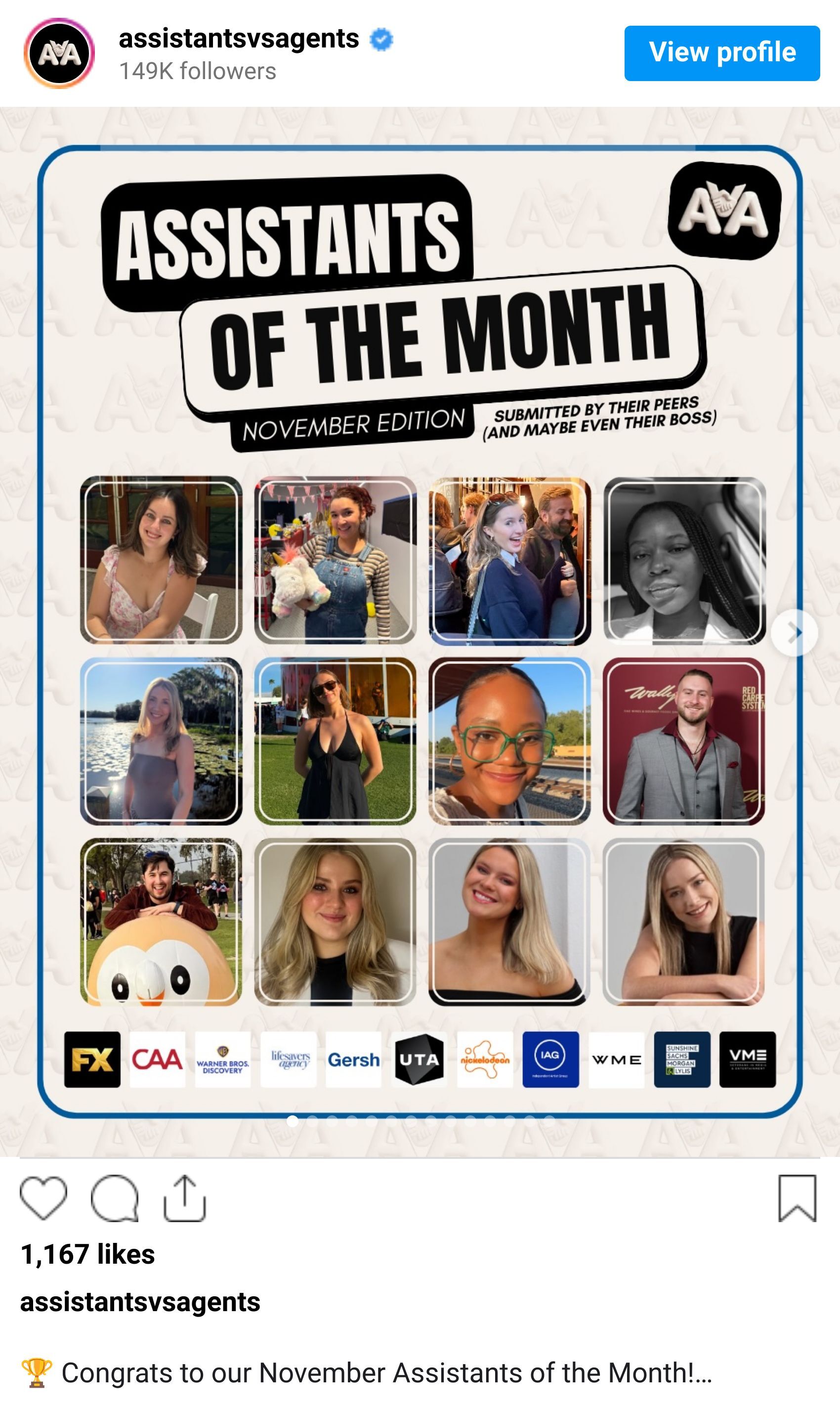
Congrats to the November Assistants of the Month! 🏆


Our new job board features 135+ early career roles in Entertainment, including:
💼 International Marketing - A24 - Apply Here
💼 Production Admin Coordinator - Sony Pictures - Apply Here
💼 Executive Assistant - Universal Music Group - Apply Here
💼 Admin Assistant (Content Promotion & Distribution) - Netflix - Apply Here
💼 Talent & Brand Marketing Coordinator - NBCUniversal - Apply Here
💼 Executive Assistant - Amazon Music - Apply Here
💼 Music Operations Associate - UTA - Apply Here
💼 Campaign Manager - Vevo - Apply Here
💼 Executive Assistant (Products/Experiences) - Paramount Skydance - Apply Here
💼 Associate Content Producer (NFL) - Fanatics - Apply Here
💼 Production Coordinator (US Scripted Production) - Amazon MGM Studios - Apply Here
💼 US Sync Temp - Warner Music Group - Apply Here
💼 Digital Strategy Manager (North Americas) - Universal Music Group - Apply Here
💼 Associate Producer, Creative Development (Temp) - Blizzard Entertainment - Apply Here


Lindsay Goffman is the co-founder & CEO of tech company Refundly and a producer with a sixth sense for global hits. She launched Gratitude Productions, worked with Apple, FX, Amazon, MGM, and Universal, and brought two Korean-format series to U.S. audiences including The Good Doctor and The Company You Keep, both breakout successes and critical darlings.
Off the lot, she pours her energy into mentorship and youth empowerment, serving on boards, judging top festivals, and championing emerging creators. She’s been honored with an Anthem Award and nominated for LABJ’s Women’s Leadership Award.
Our conversation is below:

AvA: What was your first role in Hollywood and how did you get your foot in the door?
Goffman: My first job was in the mailroom at ICM. I had just moved to LA and didn’t know a single person, but a friend of a friend connected me with Chris Keyser, who passed my resume along to Nancy Josephson. She was running TV Lit at the time and sent it to HR. When I first met with them, they told me there weren’t any openings but that they’d keep me in mind. Two weeks later, I got a call, and that’s how it all began in the mailroom.
AvA: You were early in recognizing the potential of The Good Doctor when it was just a Korean format, why do you think these "K-Dramas" continue to resonate with U.S. audiences?
Goffman: Absolutely. I’ve always been drawn to stories that make people feel seen, especially those who experience the world a little differently. The Good Doctor resonated with me because it’s ultimately about someone whose challenges become their superpower, and that really connects to my son and how he moves through life. Having a child with a visual impairment has changed the way I see everything. It's deepened my empathy and my drive to tell stories that celebrate difference and resilience. I think that personal connection has become my compass for what I choose to champion.

/
AvA: I read that The Good Doctor hit close to home because of your son’s visual impairment. How much does personal connection guide what you've decided to champion in your career?
Goffman: When I first discovered The Good Doctor, what struck me wasn’t that it was a Korean show, but how universal its heart was. It’s a story about belonging, purpose, and what it means to see the world differently, those themes translate anywhere. I think that’s why K-Dramas continue to resonate with U.S. audiences. They lean into emotion in such an honest way and aren’t afraid of sincerity or heart. Audiences everywhere connect to that kind of authenticity. In my most recent show, The Company You Keep, we had a deaf character named Ollie. I’m proud of that show for many reasons, but I especially love that we created a character who wasn’t defined by her deafness. She was complicated, layered, and real, and that’s the kind of representation I always want to champion.
AvA: What has been the biggest challenge you've had to overcome in your career and how did you navigate it?
Goffman: One of the hardest but most rewarding challenges has been stepping from producing television into building a tech company. Going from Hollywood to startup founder meant stepping into an entirely new world. I had to learn product roadmaps, fundraise, file for patents, and build engineering teams. It was intimidating at first, but I’ve realized the same skills apply: storytelling, leadership, and building trust. Both require vision and the ability to bring people together around an idea that doesn’t exist yet.
AvA: The entertainment business is built on passion, but your latest venture, Refundly, came from frustration. How did that pivot from producing to product-building happen?
Goffman: It honestly started from pure frustration. I remember returning a $150 dress and realizing months later that the refund never came through. I went digging through old emails and tracking numbers and thought, how is it that I can track a package to my doorstep but not know when I’m getting my own money back? That moment stuck with me. It was during the 2023 writers’ and actors’ strike when everything in production had come to a halt.
I wanted to solve this problem, so I started testing it myself. I ordered from the top 120 retailers to see how often refunds went missing or were delayed. We found a 7.5 percent error rate, which is huge when you think about the scale of online shopping. We’re also starting to work with TV and film productions to help them track their returns and refunds, which has already shown a real need in that world. I didn’t plan to build a tech company, but once I saw how broken the system was, I knew I had to. And in a way, it wasn’t so different from producing. You're still building something from nothing, assembling the right team, and turning chaos into something that works.
AvA: What lessons from producing TV carried over into building a tech startup, and what rules from Hollywood absolutely don’t apply in the tech world?
Goffman: Producing and startups have a lot in common, they both start with an idea you believe in before anyone else does. You’re juggling moving parts, managing personalities, and constantly solving problems while trying to protect the heart of what you’re building. The biggest lesson that’s carried over is resilience. In Hollywood, you hear “no” a million times, and you learn to listen for the note behind the note, to understand what people are really reacting to instead of taking it personally. That’s been invaluable when hearing feedback from investors too. And in both worlds, consumer products are a little like period shows.
What I mean by that is when they work, they’re magic, but everyone’s scared of them because they’re expensive. In entertainment, it’s production and set costs; in tech, it’s marketing and customer acquisition. But when you get it right, when it connects emotionally with people, it’s worth every risk. One funny difference, though, is how people talk about success. In Hollywood, people are almost afraid to brag. If you showed up at a dinner party and started listing your credits, people would think you’re trying too hard. But in tech, it’s the opposite, people start conversations by telling you how many exits they’ve had.
So I had to learn to be more forthcoming about my own background and credits, which I wasn’t used to doing. It’s been an adjustment, but it’s also pushed me to own my story in a new way.

AvA: For someone starting out in entertainment today, where do you see the biggest opportunity in the industry?
Goffman: There’s obviously the traditional path, the mailroom, the agency route, the assistant jobs. Those are still great ways to learn the business. But I think the biggest opportunities today are in the creator economy. People like MrBeast or Dhar Mann Studios are building massive audiences and real influence, often outside the traditional system. They’re studios in their own right.
I also think there’s a lot of opportunity in working with brands. The line between entertainment, marketing, and commerce is blurring, and brands are hungry for creative partners who can tell stories that connect emotionally and drive engagement. It’s a new kind of Hollywood, one that’s more accessible and entrepreneurial, and I think that’s really exciting for people just starting out.
AvA: Show you're binging on TV right now?
Goffman: Nobody Wants This was great, and I loved the Charlie Sheen doc and South Park. Funny story, I was at a party where the host knew Matt and Trey, so I had a chance to meet them. It was the day after the VMAs when Miley Cyrus was twerking with Robin Thicke. Before that, Miley had only been the sweet, innocent Disney girl. I ended up being the one to tell them about her foam-finger performance.
AvA: First concert?
Goffman: New Kids on the Block.
AvA: Favorite concert?
Goffman: The Eagles at the Sphere was unreal. I’m not sure I can look at concerts the same way after that. The visuals added a whole new layer and it almost felt like a ride. And Taylor Swift with my daughter is right up there. I surprised her with tickets the day of the show for her very first concert and it turned into one of those unforgettable moments.
AvA: If you could have any meal on-set, what would it be (can be a combo of restaurants & dishes you love)?
Goffman: La scala chopped salad, Craig's bread, Sushi Handrolls from Umiai, Spaghetti al Limone from Terroni, and my mom's homemade ice cream cake.
AvA: Craziest "Hollywood Story?"
Goffman: My boss once had me call his dentist to ask if he could get a discount because he was such a great patient and didn’t have any cavities. It was one of those only-in-Hollywood moments.
AvA: If you could work with someone dead or alive, who would it be?
Goffman: Rick Rubin. And it almost happened. I was at a tech conference and someone mentioned they were friends with him. Since I’m involved with the Aspen Institute, we tried to line up a talk and an event. We got close, so I’m still holding out hope.
AvA: One piece of advice for someone just starting their career?
Goffman: FOLLOW UP!! People are busy so don’t take it personally. And if you say you’re going to follow up, do it. A young woman I barely knew once reached out and told me she was close to getting into the Disney Writers Program. She had worked closely with a friend of mine and I knew she was a rockstar, so I sent a few emails to the program administrators on her behalf. She ended up getting in and then staffed on a hit show. She let me know right away, which meant a lot. And when you email someone and they don’t respond, it’s totally fine. Give it a few days or even a couple of weeks, then send another quick note. I can’t tell you how many great meetings I’ve had that never would have happened if I hadn’t followed up.
👋 See you back here on Monday
What do you find most valuable about The AvA Connection?
Want this newsletter in your inbox every week?

This newsletter is written by Warner Bailey and edited by Riley Furey and Dominik Sansevere.
Get in touch! Email us at [email protected].
Want to partner with us and reach 230,000+ music and entertainment professionals? Email [email protected]
Want to write your own newsletter? Check out our friends at Beehiiv